
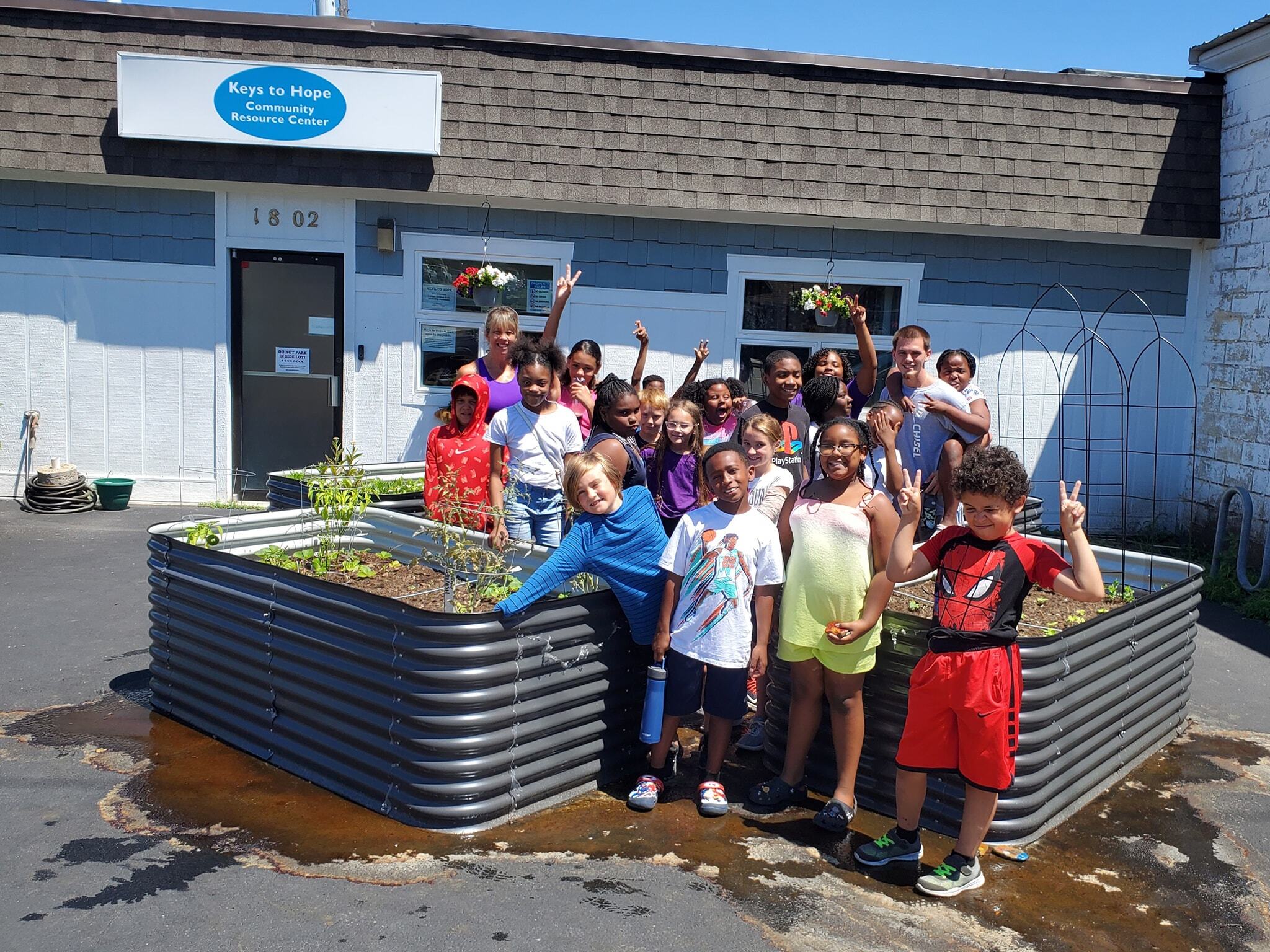
MICHIGAN CITY — In Michigan City, homelessness is no longer treated as a revolving crisis but confronted as a challenge that can be solved.
Since opening its doors in 2015, the Keys to Hope Community Resource Center program of Citizens Concerned for the Homeless, has quietly reshaped the city’s approach to supporting unhoused individuals, replacing short-term sheltering with dignity, accountability and a clear pathway toward lasting self-sufficiency.
In 2014, Michigan City adopted a formal plan to end homelessness, which included creating a daytime resource center for men and their daily transition out of the community’s overnight emergency shelter.
That vision moved from plan to practice in May 2015 with the opening of Keys to Hope. Since then, the center has documented more than 150,000 visits, reflecting both the scale of need and the trust the program has built within the community.
The mission of Keys to Hope is direct and intentional: to help individuals experiencing homelessness, or at risk of losing their housing, to eliminate the barriers that stand between them and sustainable self-sufficiency.
Rather than offering temporary relief alone, the program focuses on long-term stability through individualized support and measurable outcomes.
According to KTH program coordinator, Nicole Mitchell, Keys to Hope succeeds because “we treat each participant as an individual, not a statistic. Through personalized support and intentional guidance, our team helps people remove barriers, recognize their potential and move confidently toward a future they once thought was out of reach.”
Before Keys to Hope opened, individuals experiencing homelessness were routinely marginalized, unwelcome in public spaces and cut off from meaningful assistance said Jim Musial, executive director of CCH.
“One of the program’s earliest and most significant impacts was the restoration of dignity and respect through safety, structure and consistent support. This shift not only benefited participants but also strengthened the broader community by fostering understanding and inclusion. These men were without any direction, assistance or guidance,” said Musial, adding that Keys to Hope, once open, provided them with that.
Under the direction of the Keys to Hope team, participants receive access to essential daily resources, including individualized case management, shower and laundry facilities, lockers, bus passes and a permanent mailing address.
These foundational services are paired with opportunities for personal growth through partnerships with CCH sister program Grace Learning Center and other community service organizations.
Offerings include life-skills training, computer classes, financial literacy, budgeting and credit repair assistance, as well as job-readiness preparation.
When appropriate, participants are referred to mental health professionals, substance use disorder specialists and medical providers.
This comprehensive approach empowers individuals to address personal challenges while working toward stability. As participants advance, many gain employment and housing, rebuild relationships and re-enter the community as contributing members, reducing reliance on emergency services and public resources.
Currently, 45 enrolled participants are actively working on individualized action plans jointly created by Keys to Hope case managers and the participants.
Keys to Hope, on average, serves more than 300 unique individuals each year. Across Michigan City, hundreds of former participants are now employed and housed, while current participants continue moving along the same path toward independence and long-term stability.
Program success is measured using standards set by the U.S. Department of Housing and Urban Development and the State of Indiana, focusing on employment, housing attainment and effective case management.
As barriers are removed, participants work steadily toward stable jobs and permanent housing. Another critical outcome is the elimination of personal barriers that previously prevented progress, particularly among individuals who had struggled within the traditional shelter system.
The final measure of success is sustainable self-sufficiency. After their time at Keys to Hope, individuals are equipped not only to exit homelessness, but to sustain stability and success long into the future.